
Who is Cheating Ghanaians: GRA, Shop Owners, or the Government?
Two months after the government announced the abolition of the COVID-19 levy and a restructuring of Ghana’s Value Added Tax (VAT) regime, many Ghanaians are still paying the same taxes they were promised had been removed. The reform, which took effect on January 1, 2026, was supposed to reduce the effective VAT rate from 21.9% to 20% and eliminate the 1% COVID-19 Health Recovery Levy. In theory, this meant consumers should have experienced some level of relief in their spending.
Yet the reality on the ground tells a different story.

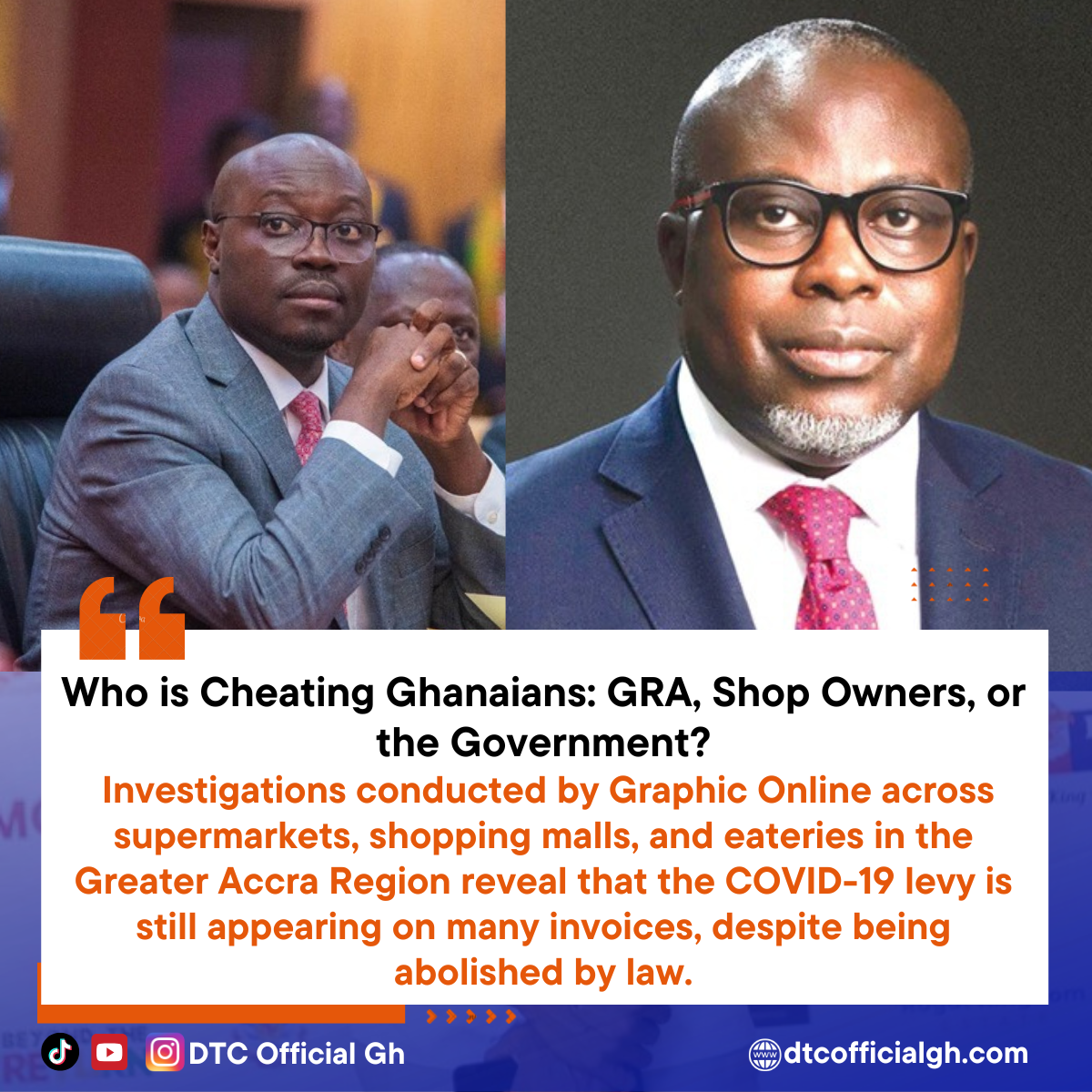
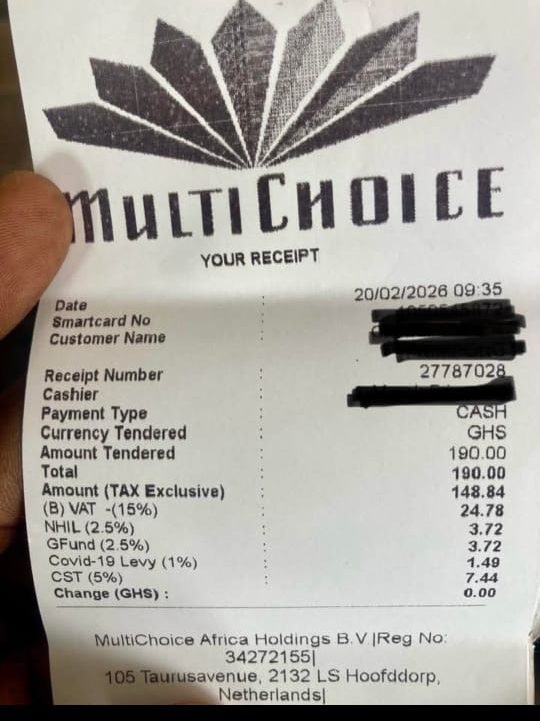
Investigations conducted by Graphic Online across supermarkets, shopping malls, and eateries in the Greater Accra Region reveal that the COVID-19 levy is still appearing on many invoices, despite being abolished by law. Even more puzzling is that some businesses that claim to have removed the levy have not reduced their prices accordingly.
This situation raises a troubling question: Who exactly is cheating Ghanaians?
Is it the Ghana Revenue Authority (GRA), the shop owners, or the government itself?
READ ALSO: Five Technology Issues to Watch Out For in 2026
The Promise of Tax Relief
The VAT reform under the Value Added Tax Act, 2025 (Act 1151) was meant to simplify Ghana’s tax structure and reduce the burden on consumers. By removing the COVID-19 levy and eliminating cascading taxes, the reform was projected to free approximately GH¢5.7 billion in disposable income for Ghanaians.
Consumers expected to see at least a 1.9% reduction in prices on goods and services.
But that expectation has largely not materialized.
Instead, many invoices still show outdated tax structures, including the abolished 1% COVID-19 levy and, in some cases, the 3% VAT flat rate, which the new law has also eliminated.
If the law has changed, why are consumers still paying these charges?
The Businesses’ Defence
Some businesses argue that the problem lies not in bad faith but in technical challenges. According to them, updating billing software, accounting systems, and pricing structures takes time.
Others insist the transition period between the passage of the law and its implementation was too short. The law was passed in December 2025 and became effective on January 1, 2026, leaving businesses with only a few weeks to adjust their systems.
From a practical standpoint, this explanation may carry some weight, particularly for small and medium-sized enterprises that rely on third-party accounting software.
However, there is a critical flaw in this argument.
Even if systems are not updated, charging an abolished tax remains unlawful.
Tax experts have made this clear: once Parliament repeals a tax and the President assents to the law, that tax ceases to exist immediately. Continuing to charge it is simply illegal.
The Position of the GRA
The Ghana Revenue Authority has stated unequivocally that businesses should stop charging the COVID-19 levy immediately. According to officials, customers who are still paying the levy can take their receipts to any GRA office and request a refund.
While this response appears reasonable on paper, it also raises questions.
Why should the burden fall on consumers to detect, report, and reclaim illegal charges?
Most shoppers do not have the time, knowledge, or patience to walk into a tax office to process refunds for small amounts deducted at the point of sale.
If the GRA knows that businesses are still charging abolished taxes, the real question becomes: where is the enforcement?, because education alone cannot replace regulation.
READ ALSO: Oliver Barker-Vormawor’s Bold Take on Power, Hope, and Neocolonial Influence
The Possibility of Quiet Profiteering
Another troubling possibility is that some businesses may be deliberately exploiting the confusion.
When consumers are unaware of tax reforms, businesses can maintain previous price levels while quietly removing or retaining certain tax components in their internal calculations. In some cases, base prices may even be adjusted upward so that the final amount paid by consumers remains unchanged.
In simple terms, the tax reduction intended for consumers may be quietly absorbed as profit margins.
If this is happening, then the reform meant to relieve Ghanaians may instead be enriching a few businesses.
The Government’s Responsibility
However, responsibility cannot be placed solely on businesses. The government also bears a share of the blame.
Effective policy reforms require more than passing laws; they require clear communication, adequate transition periods, and strict enforcement mechanisms. When a nationwide tax reform is introduced with limited preparation time and insufficient business engagement, confusion becomes inevitable.
Without aggressive monitoring and penalties for non-compliance, even well-intentioned policies can fail in practice.
This is where the government must demonstrate seriousness. If the abolition of the COVID-19 levy was meant to provide real relief to citizens, then authorities must ensure that the benefit actually reaches the consumer.
MUST READ: The NPP at a Crossroads: Why Boakye Agyarko Kyerematen Must Lead the Party’s Renewal
So, Who Is Cheating Ghanaians?
The uncomfortable truth is that the problem may not lie with just one actor.
It could be a combination of systemic failures:
- Businesses that have failed—or refused—to update their systems
- Weak enforcement from the tax authorities
- And a government that rushed implementation without adequate transition planning
But while institutions debate responsibility, Ghanaians continue to pay taxes that no longer exist.
A Final Question
Policies are not judged by what they promise, but by what citizens actually experience.
So until invoices stop showing the COVID-19 levy and consumers begin to see real price adjustments, the question will continue to echo across markets and shopping centers:
Who is cheating Ghanaians, the GRA, the shop owners, or the government?



1 Response
[…] READ ALSO: Who is Cheating Ghanaians: GRA, Shop Owners, or the Government? […]