
How China Just Overtook America as the Defender of Global Order
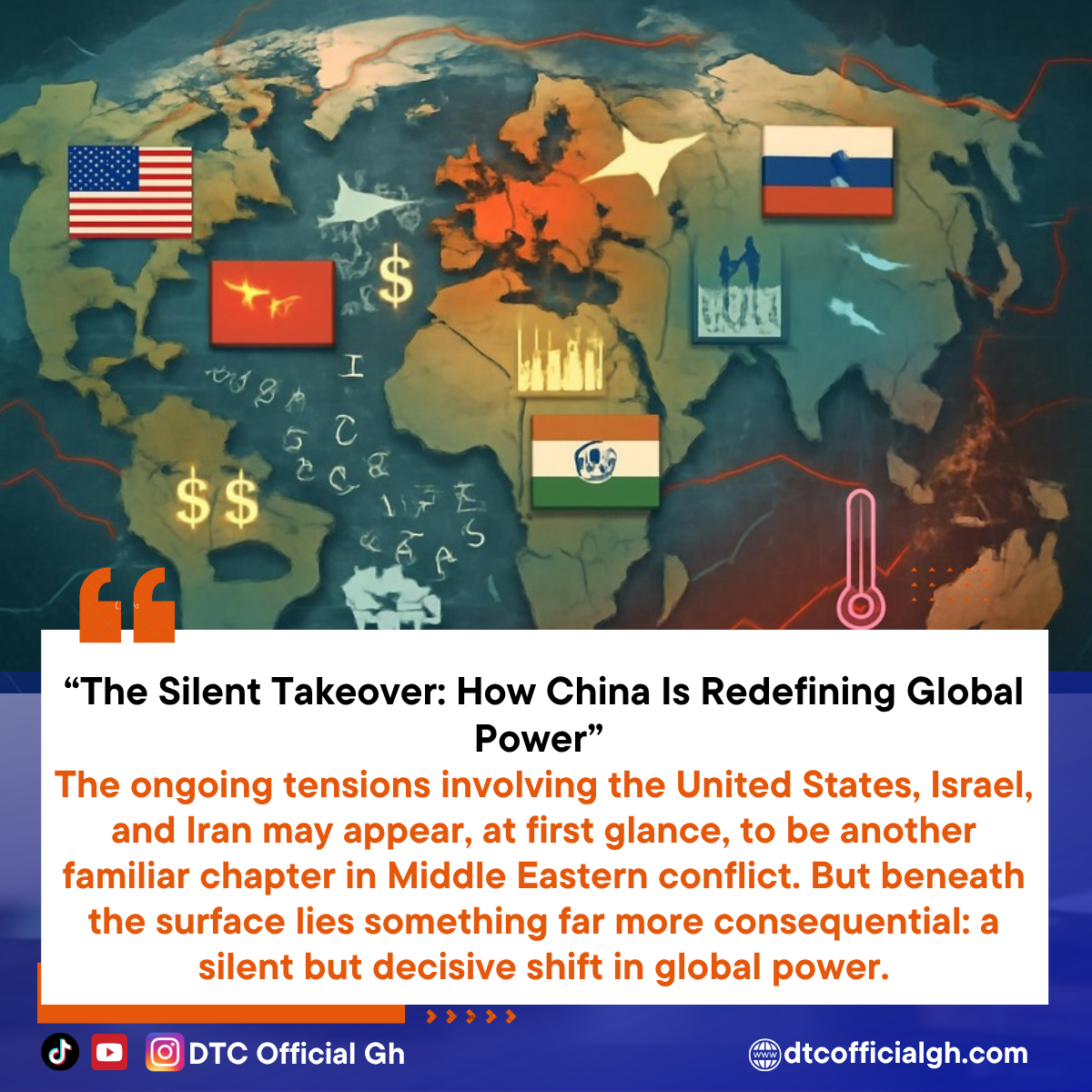
In a single vote at the United Nations, Beijing did something Washington has forgotten how to do: it acted like a responsible steward of the international system.
It was a moment that should have sent a chill through every corner of the State Department, the Pentagon, and the West Wing, though it’s unlikely anyone there was truly surprised.
On April 7, 2026, China and Russia vetoed a UN Security Council resolution that sought to authorize other countries to forcibly reopen the Strait of Hormuz. The draft, proposed by Bahrain and backed by Gulf states, appeared on its surface to be about the freedom of navigation, a principle Washington claims to hold sacred. Eleven council members voted in favor. Two voted against. Two abstained. The resolution failed.

But beneath that procedural outcome lies something far more consequential. In that moment, China positioned itself not as a disruptor of the rules-based order, but as its protector, while the United States, by its actions and alliances, appeared as the primary threat to global stability.
This is the story of how, in the crucible of the US-Israeli war with Iran, China has begun to overtake American hegemony. And it is a story the West ignores at its peril.
Part I: The Logic of the Veto; Why Beijing Said No
To understand what China has achieved, you must first understand what was actually being proposed.
The Security Council resolution did not explicitly authorize war. But as China’s UN Ambassador Fu Cong pointed out in his explanation of the vote, the language was dangerously open-ended. It would have given a “veneer of legitimacy for unauthorized military operations” and provided a “license to the use of force” under the guise of “defensive” coordination.
Beijing looked at this text and saw the ghosts of Libya, of Iraq, of the Red Sea escalations. Ambassador Fu explicitly warned the council not to “repeat past mistakes”, mistakes that have destabilized entire regions under the banner of humanitarian intervention or freedom of navigation.
China’s argument was legally meticulous and strategically devastating:
First, the resolution ignored the root cause of the crisis. As Russia’s representative Vassily Nebenzia put it bluntly: “The Strait of Hormuz was open until your military strikes on Iran”. The US and Israel launched their joint military operation against Iran on February 28, 2026. Iran’s subsequent closure of the strait was a response, not an act of unprovoked aggression. To draft a resolution that punished Iran for the symptom while ignoring the American-Israeli trigger was, in China’s view, a diplomatic perversion.
Second, the veto was cast precisely as the United States was openly threatening the survival of an entire civilization. Ambassador Fu pointed directly at the rhetoric coming from Washington, rhetoric that any neutral observer would recognize as escalatory, not defensive. In this context, to empower the US and its allies to use force in the Strait was not peacekeeping; it was adding fuel to a fire already burning out of control.
Third, and most importantly, China balanced its veto with a demand on Iran. Fu made clear that Beijing expects Tehran to restore normal navigation and stop attacks on Gulf facilities. This is the mark of a genuine power broker: China said no to the US while simultaneously holding its partner Iran accountable. Washington, by contrast, has offered only ultimatums.
The result was a diplomatic masterstroke. China looked like the adult in the room. The United States looked like the arsonist demanding the fire department stand down.

Part II: The Naval Reality, Untouchable in the Gulf
Diplomacy, however, is only half the story. The other half unfolded on the water.
The US military announced a blockade of Iranian ports in mid-April, deploying more than a dozen warships and 10,000 service members to enforce it. The Trump administration declared that no vessel trading with Iran would be permitted to transit the Strait of Hormuz. And in the first 24 hours, the blockade appeared to work: six merchant vessels, including a Chinese oil tanker, were turned around or intercepted.
READ ALSO: “We Are Not Talking About Competition” The Brutal Truth About Ghana’s Financial Trap
But here is where the narrative fractures.
The Chinese vessel Rich Starry, a chemical and crude oil carrier sanctioned by the US in 2023 for trading with Iran, did something remarkable. It navigated north of the strait using an Iran-declared transit corridor through Iranian territorial waters, paying a toll in cryptocurrency to Tehran for safe passage. The ship was tracked exiting the strait, then turning back, then signaling from inside the Persian Gulf. The picture is one not of US dominance, but of cat-and-mouse evasion that the blockade cannot fully contain.
More tellingly, China’s Foreign Ministry called the US blockade “a dangerous and irresponsible move” that would “undermine the already fragile ceasefire”. And when Chinese vessels continued to operate, whether compliant or defiant, the message was clear: Beijing does not accept Washington’s unilateral rules of the road.
The United States can turn away individual ships. But it cannot turn away the reality that China secures half its crude oil from Gulf States, including undeclared Iranian product that accounts for around 10 percent of its annual imports. Over 90 percent of Iran’s crude exports go to Chinese refineries. The economic interdependency between Beijing and Tehran is not a side note; it is the structural foundation of China’s leverage.
For more insights and inspiring stories, kindly follow us on Twitter and WhatsApp.
And crucially, China pressured Tehran into the two-week ceasefire announced earlier this month. Washington can bluster about blockades and deadlines. Beijing can actually move Iran toward the negotiating table. Which of these looks more like global leadership?
Part III: The Alliance Crisis, Trump’s Betrayal of the American Order
No analysis of this moment is complete without addressing the catastrophic unraveling of American alliance politics.
Henry Kissinger’s famous observation, that “it may be dangerous to be America’s enemy, but to be America’s friend is fatal”, has never felt less like hyperbole and more like prophecy. Originally spoken in the context of Vietnam, the quote has been repurposed across decades to capture a recurring pattern: the United States abandons, undermines, or endangers its allies with startling regularity.
The Trump administration has accelerated this dynamic into a full-blown crisis of credibility. By disrespecting traditional allies, by acting unilaterally in Iran without multilateral cover, by threatening NATO partners, by imposing tariffs on friends, Washington has shattered the foundational logic of alliance politics. The message received in capitals from Berlin to Riyadh to Ankara is unambiguous: American commitments are temporary. American loyalty is transactional. American leadership is no longer a public good but a private asset to be deployed for domestic political gain.
This context makes China’s veto all the more powerful. Beijing is not asking anyone to choose between Washington and itself, at least not yet. But by positioning itself as the defender of UN processes, of root-cause analysis, of ceasefire preservation, China is offering an alternative model: stability without strings, influence without ultimatums.

Part IV: The Ghanaian Warning, What Happens to America’s Friends?
The fatal consequences of American friendship are not abstract. They are being lived, right now, by Ghana’s Foreign Minister, Samuel Okudzeto Ablakwa.
In March 2026, speaking at Chatham House, Ablakwa disclosed that Ghana had collaborated with the United States in the Christmas Day airstrike against ISIS targets in Nigeria, a strike that then-US President Donald Trump described as “a Christmas present”.
The backlash at home was immediate and ferocious. Critics called for Ablakwa’s dismissal. Opposition figures accused him of recklessly exposing Ghana to retaliation from terrorist organizations. “Do you know the danger we are in by disclosing such information?” one political aide demanded. “ISIS could now know that we were involved in attacks against them”.
READ ALSO: Despite’s Automobile Museum: A Misplaced Investment or a Catalyst for Economic Imagination?
The Minority in Parliament demanded urgent answers. Had Ghana’s territory been used as a launchpad for US strikes? Had Parliament approved such an agreement? Were Ghanaian citizens now targets because of a secret deal with Washington?
This is what it means to be America’s friend in 2026. You are asked to collaborate, often in secret. You are exposed to blowback. And when the consequences arrive, the United States does not share your risk. It does not defend you in the court of public opinion. It moves on to the next crisis, leaving you to explain to your own people why you took a gamble that may have endangered their lives.
China watched this unfold. So did the rest of the Global South. And the lesson drawn is not one that flatters the United States.
Part V: The Information War: Why Western Propaganda Is Failing
One final factor makes this moment historically distinct: the collapse of Western narrative control.
For decades, the United States could wage war and manage its image simultaneously. The media ecosystem was hierarchical. Information flowed through gatekeepers, network news desks, major newspapers, and government-affiliated experts. Uncomfortable images could be suppressed. Unhelpful testimony could be marginalized. The “good guy” frame could be maintained through careful repetition.
Those days are over.
Social media has democratized war coverage in ways no administration can fully control. Images from the Iran conflict, civilian casualties, destroyed infrastructure, refugee columns, reach millions instantly. The gap between official statements and on-the-ground reality is now visible in real-time. Young people, in particular, have stopped accepting the default narrative that America is always the righteous actor in its foreign wars.
TECH READ: AI Supremacy: Will China Win The Race?
The result is a potential reckoning with American self-image. When the US bombs a target, half the world sees a precision strike; the other half sees an act of aggression. When China vetoes a resolution, it can frame its action not as obstruction but as a check on American overreach, and millions will believe it because they have seen American overreach with their own eyes.
China does not need to control the global media. It only needs the global audience to be skeptical enough of Washington to give Beijing’s arguments a fair hearing. That skepticism is now widespread, particularly in the Global South. And it is growing.
Conclusion: The Hegemony That Ate Itself
So where does this leave us?
The United States entered the war with Iran, believing that its military dominance and alliance network would carry the day. It has achieved neither. Its blockade is contested. Its diplomatic position at the UN is isolated, with only eleven votes on a resolution that still failed. Its allies are nervous, watching Trump’s unpredictability and wondering who will be abandoned next.
China, by contrast, has achieved something remarkable. It has positioned itself as the defender of international law against American unilateralism. It has preserved its economic relationship with Iran while pressing Tehran toward ceasefires. It has used its veto power not to block peace, but to block what it characterized as a license for escalation. And it has done all of this while projecting an image of restraint, responsibility, and strategic patience.
The balance of power is shifting. Not because China has defeated the United States militarily, it has not. But because the United States, through its own actions, has surrendered the moral and diplomatic authority that underpinned its post-Cold War hegemony. The rules-based order, such as it was, was always as much about American power as about universal principles. When America itself breaks the rules, when it strikes first, demands submission, threatens civilizations, and abandons friends, the order collapses.
MUST READ: Why Mark Carney’s Davos speech matters for Africa; When a G7 leader declares that “we are in the midst of a rupture, not a transition,” Africa should hear recognition, not surprise.
China is not waiting to pick up the pieces. It is already building the next structure.
And the world, exhausted by American chaos, is watching to see if Beijing can deliver the stability that Washington has squandered.
For more insights and inspiring stories, kindly follow us on Twitter and WhatsApp.
The US-Israel war with Iran is ongoing. The Strait of Hormuz remains partially blocked. The ceasefire is fragile. But one thing is already clear: the veto cast on April 7, 2026, will be studied for decades as the moment when China stopped pretending to be a follower and stepped forward as the leader of a new global order.
America should be worried. Not because China is winning. But because America is losing, and doing so to itself.




2 Responses
[…] READ ALSO: How China Just Overtook America as the Defender of Global Order […]
[…] READ ALSO: How China Just Overtook America as the Defender of Global Order […]