
Income From Betting Should Be Taxed Like Any Other Revenue Stream.
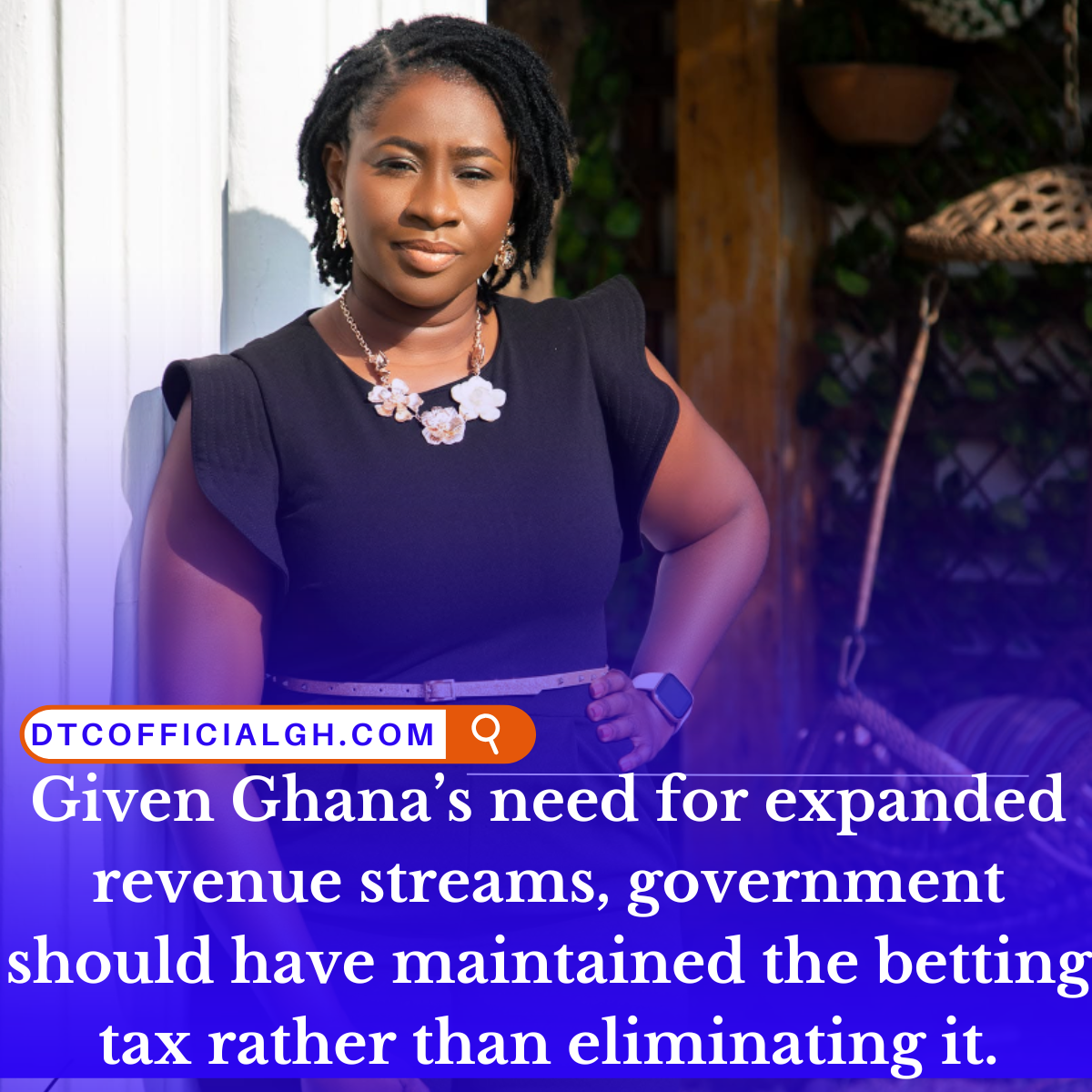
The 2025 budget has sparked intense discussions among economists, policymakers, and the general public, especially regarding removing the betting tax. In a recent conversation, Economist, Senior Lecturer, and Development Consultant Priscilla Baffour argued that the government made a misstep by scrapping the betting tax, as it would have helped broaden Ghana’s tax base.

A Budget Shaped by IMF’s Fiscal Consolidation Goals
Baffour emphasized that this year’s budget is being implemented within the framework of the International Monetary Fund’s (IMF) Extended Credit Facility (ECF) program, which places a strong emphasis on fiscal consolidation. According to her, ensuring macroeconomic stability through strict fiscal measures is essential to positioning Ghana’s economy on a path to recovery.
READ ALSO; An Urgent Call for a Sustainable Approach to Teacher and Nursing Training Allowances
Despite the tough economic conditions, the budget includes several social interventions, such as increased allocations for the Livelihood Empowerment Against Poverty (LEAP) program, capitation grants, and the school feeding program. These initiatives, she explained, are crucial in cushioning vulnerable populations and countering the perception that IMF-backed programs bring hardship.
Why the Betting Tax Should Have Stayed
Baffour expressed her concerns about the government’s decision to remove the betting tax, arguing that income from betting should be taxed like any other revenue stream. “We continuously talk about the need to broaden the tax base, and if an existing tax handle is credible, I don’t think we should take it out,” she asserted.
READ ALSO; UNDP Paid Internship Program 2025-26 For International Students
She believes that while eliminating the betting tax increases disposable income for consumers, it also reduces a potential source of government revenue. Given Ghana’s need for expanded revenue streams, she argued that the government should have maintained the tax rather than eliminating it.
Structural Economic Issues and Policy Inconsistencies
Another key issue Baffour highlighted was the imbalance in the budget’s focus. While there is a strong emphasis on consumer relief, she noted that the production sector—agriculture, industry, and services—is not receiving enough attention. This, she warned, could lead to inflationary pressures and a slower rate of job creation.

She also criticized the inconsistency in Ghana’s industrial policies, pointing out that every new administration introduces different strategies rather than continuing and improving on previous initiatives. The One District One Factory (1D1F) initiative, for example, benefited over 100 firms, yet it remains uncertain whether these firms will receive further support under the new government’s industrial development plans.
READ ALSO; Ghanaians Complain of Corruption Because They Are Not Beneficiaries – Dennis Appiah Larbi
According to Baffour, such inconsistencies hinder the long-term growth of Ghanaian businesses. “Businesses do not become conglomerates over a four-year period. If we are serious about job creation, we need to ensure that our policies do not change drastically with each new administration,” she said.
A Cautiously Optimistic Outlook
On the overall budget, Baffour maintained a position of cautious optimism. While she acknowledged that the government is aligning its policies with the IMF program, she noted that Ghana’s projected economic growth rate for 2025 is more conservative than expected. The government has forecasted a growth rate of 4%, lower than the IMF’s projection of 4.7%.
Click here to follow DTC Official Gh’s channel on WhatsApp for more,
She suggested that this could be a strategic move to set modest expectations and later claim success if actual growth exceeds projections. However, she cautioned that conservative growth estimates could impact government revenue expectations and spending plans.

Conclusion
Priscilla Baffour’s analysis underscores the complexities of Ghana’s 2025 budget. While there are commendable efforts to support social programs, the decision to remove the betting tax, coupled with inconsistent industrial policies, raises concerns about long-term economic sustainability. As the government moves forward, balancing consumer relief with strong production and tax policies will be critical to achieving sustained economic growth.



2 Responses
[…] READ ALSO: Income From Betting Should Be Taxed Like Any Other Revenue Stream. […]
[…] READ ALSO: Income From Betting Should Be Taxed Like Any Other Revenue Stream. […]