
An Urgent Call for a Sustainable Approach to Teacher and Nursing Training Allowances
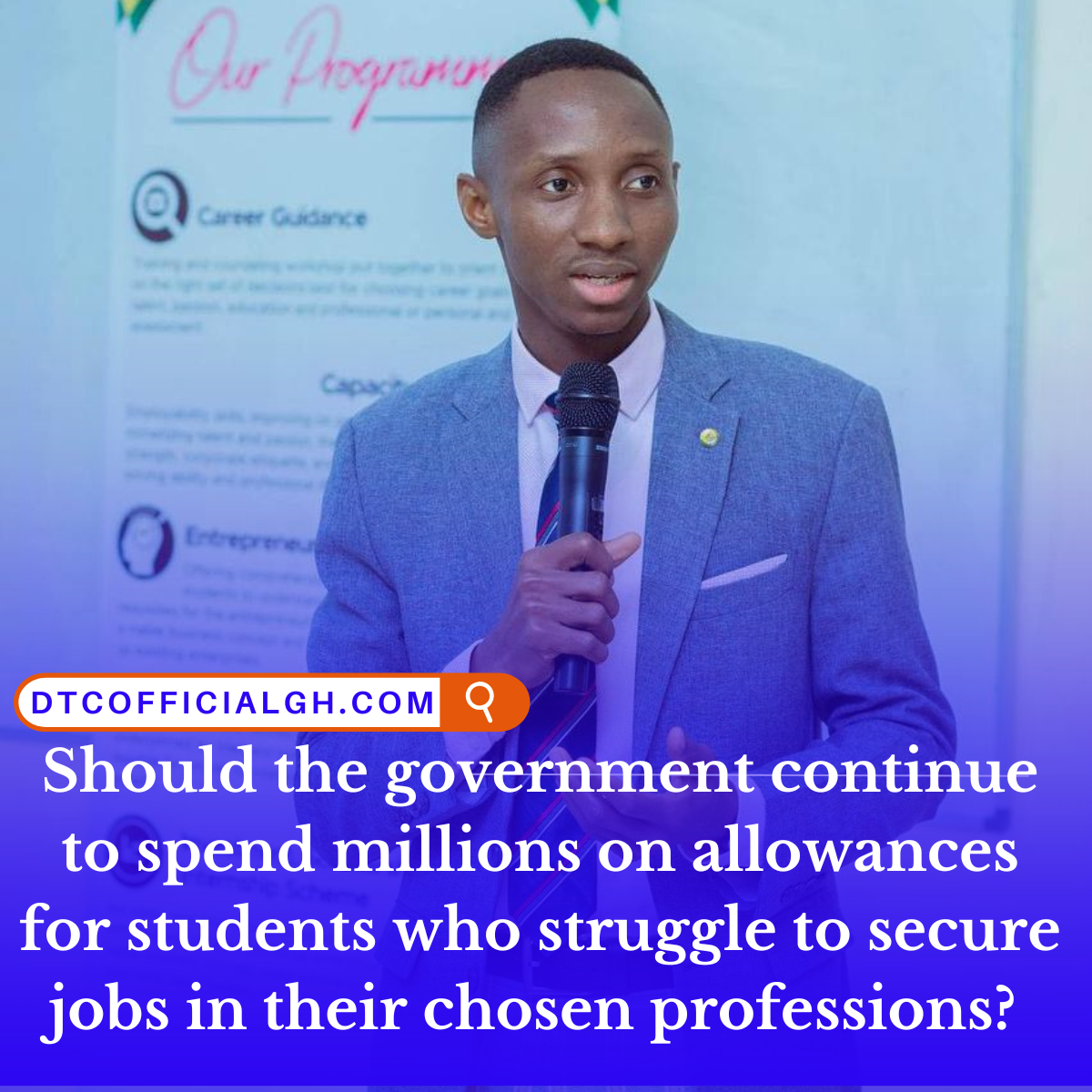
In a compelling address to the Government of Ghana, the Hon. Minister of Finance, the Ministry of Education, and all relevant stakeholders, Riffath-Yakub Abubakar, an advocate for youth development, has called for urgent reform in the handling of Teacher and Nursing Training Allowances (TTA and NTA).

Abubakar strongly objects to the continued payment of these allowances, citing concerns about their sustainability and effectiveness. His call comes at a time when millions of Ghanaian cedis are allocated annually to these allowances, despite a growing number of graduates from Teacher and Nursing Training programs facing unemployment.
The 2025 national budget allocates a staggering GHC 203 million for the Teacher Training Allowance and GHC 480 million for the Nursing Training Allowance, totaling nearly GHC 700 million. Yet, the return on this investment remains dubious, as many trained teachers and nurses struggle to find work after completing their programs.
READ ALSO: Government Freezes Employment Despite 24-Hour Economy Promise
Abubakar points out the inefficiency of the current system, emphasizing that the massive funds invested in TTA and NTA do little to address the core issues facing these institutions. He laments the lack of proper infrastructure at most Teacher and Nursing Training colleges, which includes overcrowded classrooms, inadequate teaching materials, and poor accommodation facilities. These deficiencies, according to him, limit the capacity of the institutions to admit more students, exacerbating the teacher-to-student and nurse-to-patient ratios in the healthcare and education sectors.
TECH READ; AI Is Coming for You- The Double-Edged Sword of Artificial Intelligence
Abubakar’s statement raises an important question: Should the government continue to spend millions on allowances for students who struggle to secure jobs in their chosen professions? “He questions whether the provision of these “breakfast allowances” is more important to the students than ensuring guaranteed employment. Furthermore, he draws attention to the fact that university education is often viewed as more prestigious and relevant than these training programs, which receive significant financial support without corresponding outcomes.

The appeal to redirect the funds allocated for TTA and NTA into more sustainable investments is a key part of Abubakar’s message. Rather than continuing the current cycle of financial “pampering,” he proposes a shift in focus towards improving infrastructure, expanding student admissions, and creating more job opportunities for graduates. He advocates for enrolling students in the student loan scheme, similar to university students, which would help ease the financial burden while simultaneously fostering a more productive approach to training the next generation of educators and healthcare professionals.
BUSINESS READ: The Future of Jobs: Key Insights and Emerging Trends
Proposing Strategic Investments for Sustainable Development:
Abubakar advocates for a paradigm shift in funding allocation, proposing that the substantial funds currently directed toward allowances be invested in strategic initiatives that promise generational returns:
- Infrastructure Enhancement: Investing in the expansion, construction, and renovation of educational and healthcare facilities to create direct employment, conducive bungalows, hostels, and learning and working environments.
- Student Loan Schemes: Introducing loan schemes for trainees, similar to those in universities, to reduce the financial burden on the government and promote a culture of investment in personal development.
- Equitable Resource Distribution: Ensuring that resources, including personnel, are evenly distributed across regions to address disparities and improve service delivery nationwide
- Capacity Building: Providing educators and healthcare workers continuous professional development to enhance service delivery and job satisfaction.
Abubakar concludes his statement by urging the government and all stakeholders to adopt a forward-thinking education policy, one that not only ensures adequate training for teachers and nurses but also guarantees their sustainable employment in the future.
As Ghana faces the challenges of an evolving education and healthcare system, Abubakar’s call for reform underscores the urgent need for a more strategic, long-term approach to training allowances and the future of these critical sectors.
Written By
Riffath-Yakub Abubakar
Students/Youth Development Mentor/Coach
Executive Chairman, National Academy of Students’ Achievement Awards Ghana (NASAAG)



1 Response
[…] READ ALSO; An Urgent Call for a Sustainable Approach to Teacher and Nursing Training Allowances […]