
Ghanaians Complain of Corruption Because They Are Not Beneficiaries – Dennis Appiah Larbi
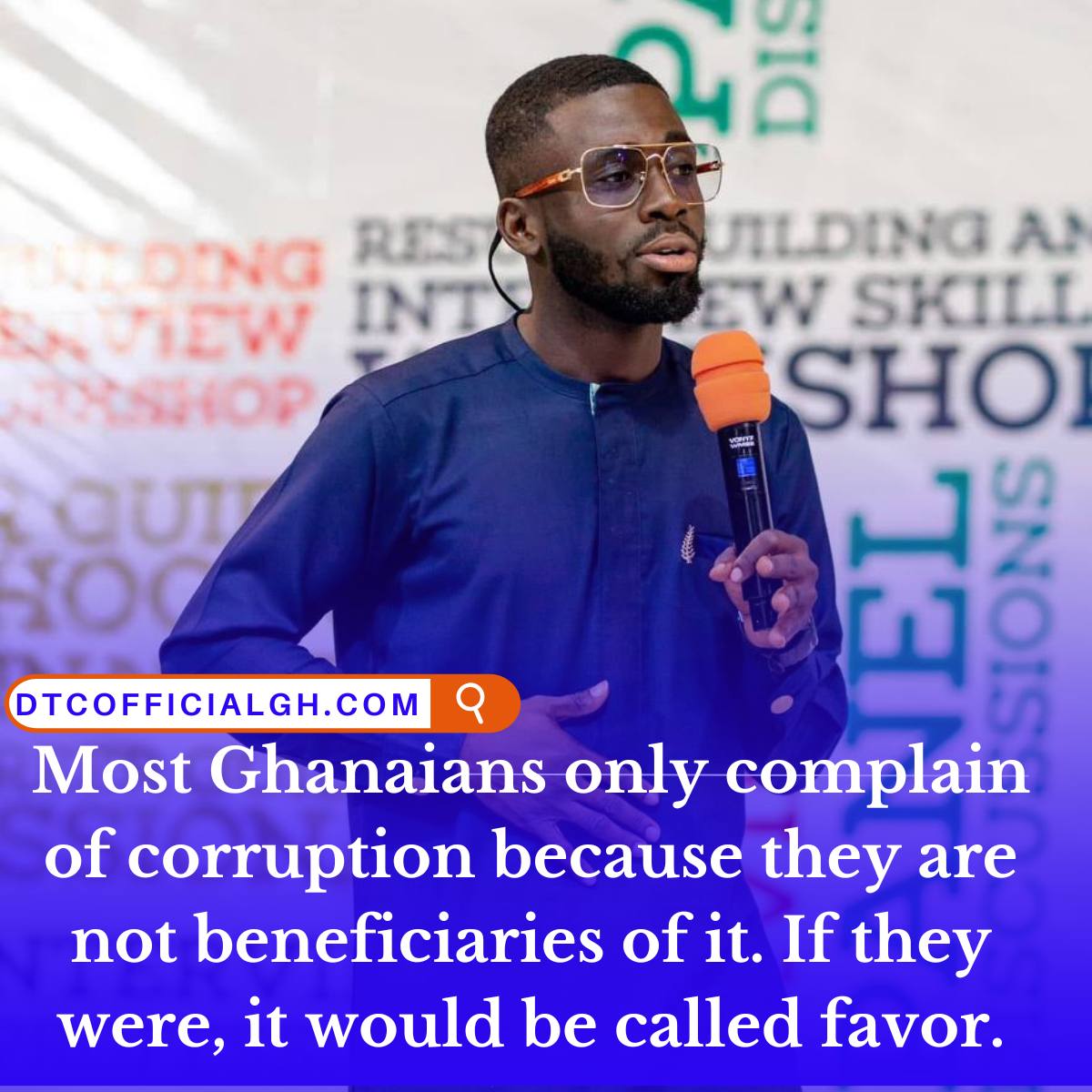
Corruption remains a deeply entrenched issue in Ghana’s governance and political landscape, sparking debates on its root causes and possible solutions. Dennis Appiah Larbi, a political communicator, recently shared his thoughts on the matter, making a striking claim: “Most Ghanaians only complain of corruption because they are not beneficiaries of it. If they were, it would be called favor.“

His assertion sheds light on a broader societal problem—corruption is often condemned by those who feel excluded but tolerated, or even justified, by those who benefit from it. It reflects a cultural reality where personal interest sometimes overshadows the collective demand for accountability.
READ ALSO: A Bold Call for Economic Transformation at the National Economic Dialogue 2025
Corruption: A Systemic Issue Beyond Leadership
Appiah Larbi argues that while political parties and governments face public scrutiny for corruption, the real drain on the state’s resources happens at the middle and lower levels of governance. He suggests that even the strongest leaders, including former Presidents Rawlings and Akufo-Addo, have struggled to curb corruption because it is deeply embedded in Ghanaian society.

“One person as President has almost 7,000 appointees either appointed by him or through his vested powers. It’s practically impossible to replicate toughness across a culturally deepened corrupt society,“ he noted. This statement highlights the complexity of the fight against corruption, emphasizing that the challenge is not just about leadership but about a deeply rooted culture of unethical practices.
The Need for Public Accountability
One of the key points raised in his analysis is the role of public hearings and inquiries in promoting transparency. Referring to the recent parliamentary proceedings involving the Bank of Ghana (BOG) Governor, he suggested that such hearings are necessary for holding public officials accountable and restoring public trust.
READ ALSO: E. Wells Realty Recognized Among the Top 100 Emerging Global Businesses of 2025!
He believes the ruling New Patriotic Party (NPP), which has faced significant corruption allegations, should embrace more public inquiries as a way to clear its name and regain credibility.
“It is good for our party that needs to make a good public opinion case for itself,” he stated, adding that beyond party politics, the state needs more of such accountability measures to address declining public trust in governance.
Digitalization as the Key to Fighting Corruption
Beyond public scrutiny, Appiah Larbi advocates for reducing human involvement in government processes by leveraging digitalization. He argues that properly structured, transparent systems anchored in the digital space can significantly curb corruption by minimizing opportunities for personal discretion and cash transactions.
MUST READ: We Need Deliberate and Sustained Efforts to Win the Fight Against Single-Use Plastics – Peter Agbeko
This, he says, is the main reason he supported Former Vice President Dr. Mahamudu Bawumia, who has championed digital transformation in governance. According to him, no matter how tough or incorruptible a leader is, systemic corruption in Ghana is so pervasive that only technological interventions can effectively address it.

The Way Forward
Appiah Larbi’s reflections highlight a critical challenge in Ghana’s fight against corruption: a society where many complain about corruption only when they are not benefiting from it. His argument suggests that changing leadership alone is not the solution—there must be a fundamental shift in cultural attitudes, stronger accountability mechanisms, and increased reliance on digitalization to reduce opportunities for corruption.
EXPLORE: Preparing for the Global Digital Economy: A 6-Month Intensive Training Program
As the country gears up for another election cycle, these insights serve as a reminder that the fight against corruption is not just a political issue but a societal one. Ghanaians must decide whether to be passive spectators or active participants in demanding accountability at all levels of governance.



1 Response
[…] READ ALSO: Ghanaians Complain of Corruption Because They Are Not Beneficiaries – Dennis Appiah Larbi […]